
For the first time in India, Swiss Learning, an educational body managed by the Heads of Swiss Educational Institutes, has brought representatives from various schools from the country to meet stakeholders, Indian schools and parents of potential students.
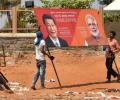
'Since the bilateral deficit is a reality -- and a worry -- we need to find a way to deal with it,' says Ravi Bhoothalingam.

Overseas education consultant NNS Chandra offers advice on how to pick the right international career for you.

Neither pharma nor IT would have become the stars of the economy without the active but largely invisible hand of the Indian State, says Ajit Balakrishnan.

Experts say Indian students will have to accept that international space for them is shrinking.
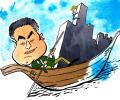
Anshuman Magazine of CBRE discusses effective leadership, millenials, Trump's America and his core business -- the real estate market -- with Nivedita Mookerji.
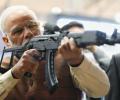
'It does not look like unemployment is a priority for the government.' 'If there was one external factor which could have made an impact on low investment and low jobs, it was the Budget and it has not made any difference.' '2020 is going to be a difficult and challenging year.'

Nearly 31 million Indians are unemployed and looking for jobs. While economic growth has been humming along, the pace of job creation has been poor. A revealing excerpt from Dev Kar's India: Still A Shackled Giant.

36-year-old Sunil Yadav, who works as a garbage collector for the civic body in Mumbai is an inspiration. He chronicles the arduous journey he took to secure his MPhil degree and why he refuses to give up his job despite his education.

During their talks, the two leaders decided to significantly expand their ties in several key areas including defence, trade, energy and education.

'With technology advancing rapidly, the need for branches is declining.'
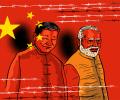
'Given the sharp increase in oil prices, a mounting problem for the 2nd and 4th largest importers like China and India -- the Qingdao meeting is likely to push for the large energy producers (Russia and the Central Asian Republics) and energy consumers (China and India) to arrive at some understanding for mutually beneficial outcomes,' notes Srikanth Kondapalli.
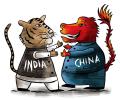
'China's vulnerability on the global stage has given an opening to India to push for its own interests,' notes Harsh V Pant.
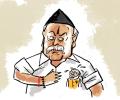
'By holding forth on Swadeshi economics, Bhagwat is showing his intent to fight back,' says Shekhar Gupta.

Helen Brand offers a CA's view on protectionism, money laundering and how India's implementation of Ind-AS will make it more attractive to investors.

'Tax dodging through tax havens is one of the ways multinational corporations and the super-rich in India are using to evade taxes.'
This new Silk Road has the potential to once again have a lasting impact on the commerce and culture of this region for generations to come

Eradicating the Aedes aegypti or developing a vaccine will take years. Genetic modification offers a way out; the question is how to scale it up across continents, says Devangshu Datta.

Anti-nuclear activist S P Udayakumar, who has been called a threat to the economic security of India by the Intelligence Bureau, speaks to A Ganesh Nadar.

'China is where the action is, and from where new ideas ('String of Pearls', 'One Belt, One Road') emanate.' 'The Belt-and-Road initiative alone is unmatched in its sweeping dimensions,' says B S Raghavan.

On a visit to India in 2013, writer Ved Mehta -- who passed into the ages on Sunday January 10, 2021 - gave Rediff.com's Vaihayasi Pande Daniel a rare glimpse into his state of mind and what he thinks of the changes he encounters in his motherland.

'Trump's desecration of all that Obama represented can be seen at different levels: Personal, political, systemic and structural,' explains Ambassador B S Prakash.

'The government is sincerely working on employment generation. Unfortunately, they are depending on these people from Harvard. Their wrong policies are killing jobs. The government has to come out of the Western framework on which they depend upon a lot.'
'We have the geographic advantage, demographic advantage, we have the necessary technical skills.' 'We just have to get all of these together. Then, we can very well compete.'

Kailash Satyarthi, co-winner of the Nobel Peace Prize, in front of packed crowd made a rousing speech asking every person to come together and set our children free. He honoured those who came before him and also said that he accepted this honour on behalf of all the martyrs and activists in India. Here's the transcript of his moving acceptance speech.

'With this amendment, permanent employees will cease to exist.' 'The government should give a human touch and human face to labour reforms.' 'Ideas like survival of the fittest, might is right, etc, are rules of the jungle.' 'They cannot give new terms like hire and fire to jungle law.'

What are the most worrisome aspects of climate change for India? Can they be solved?

'As they come in contact with more people in their professional life, they will need to uncover even more opportunities for growth.'

The $12.1 billion Corus acquisition-the biggest global acquisition made by an Indian company-ended up as a millstone around Tata Steel's neck, points out Indrajit Gupta.

'The forces of good are on the run.' 'But dark times also challenge people to fight.' 'I believe Indians will rise against these dark times.'

'China's growing nexus with Pakistan and the two countries' unresolved territorial disputes with India continue to pose a formidable national security threat to India,' says Brigadier Gurmeet Kanwal (retd).

Chaayos, Chai Point target the millennial. Tea retail brands are personalising the brew and the experience; hoping to carve a distinct identity for their labels.

For a rising country like China with its sights set on global and regional power, any coming together of the US and India is the worst case scenario. Hence, China is concerned with the emerging equations between New Delhi and Washington, says Srikanth Kondapalli.

'Unsurprisingly, the joint statement issued after Modi's visit contains a paragraph on terrorism.' 'It is on the usual lines that India would have with, say, Croatia.' 'The surprising part is that it shies away from getting into specifics,' points out Ambassador M K Bhadrakumar.

Socialising with people around you is actually easy and effective if done the right way.

'...Unless we muck up our policies.' 'We have to become a modernised economy.' 'Our institutions should be stronger. And that is most important.' 'The rule of law should prevail and contracts should be enforced.' 'Above all, we have to recognise the importance of globalisation.' 'It is in our favour at this stage. We should grow and become globally competitive.'

'India does not wish to remain silent in improving its strategic space so that its leverage to counter China's expansionist designs is maintained, besides enabling it to play a responsible role from a position of strength for peace and stability in Asia,' points out Dr Rajaram Panda.

'No other terror organisation has valued popular consensus as the Islamic State does -- instead of repressing people, IS wants to gain their support. This is a major innovation in terrorism,' says terrorism expert and author Dr Loretta Napoleoni in an interview to Archana Masih and Syed Firdaus Ashraf/Rediff.com.

'China, which had earlier blockaded New Delhi's bid to join the Nuclear Suppliers Group by citing the nuclear non-proliferation law, finds itself in an awkward position and international isolation.' 'India needs to pursue a policy of mediation between China and the Southeast Asian countries for regional security,' says Srikanth Kondapalli.

Teachers across universities are questioning the "thoughtlessness, rushed manner and opacity" of the process in which the UGC announced the introduction of the choice-based credit system across universities in the country.
